
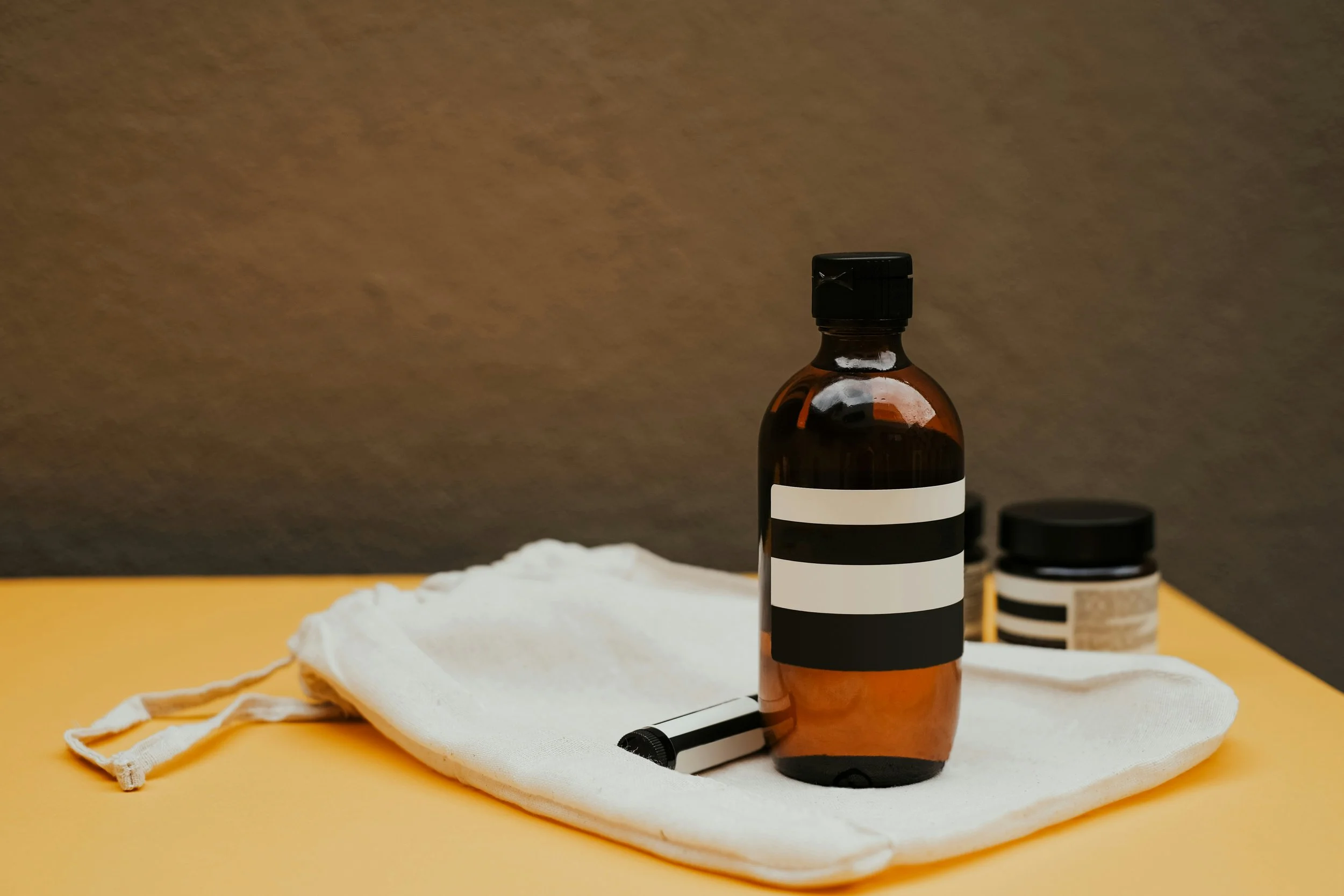
A castor oil pack is mostly a heat treatment, and that heat is part of why so many women find them soothing.
Castor oil packs are one of the most talked-about practices in TTC communities right now, and if you've spent any time in fertility threads on Reddit or TikTok, someone has probably told you to try them. They're inexpensive, they feel good, and they give you something to do with your own hands during a stretch of time when so much feels out of your control. I recommend them to some of my patients, and I also think you deserve a clear picture of what they can and can't do before you buy a wrap and a bottle of oil.
Below, you'll find where castor oil packs come from, what the research shows and where it runs thin, how to do one, and the timing rules that matter most when you're trying to conceive.
What is a castor oil pack?
A castor oil pack is a piece of flannel or cotton soaked in castor oil, laid over your lower belly, covered, and warmed with a heating pad or hot water bottle for 30 to 60 minutes while you rest. Castor oil is pressed from the seeds of the castor plant, Ricinus communis, and it's unusually thick because almost all of it is a single fatty acid called ricinoleic acid, which is responsible for most of what castor oil does in the body.
Why are castor oil packs so popular?
Castor oil has a very long history. It appears in ancient Egyptian medical texts, and Ayurvedic medicine has used it for centuries, mostly taken by mouth as a laxative. In Chinese Medicine, the castor seed itself, Bi Ma Zi, has a place in the materia medica as a topical herb that reduces swelling, draws out toxins and unblocks what's stuck, and it's contraindicated in pregnancy.
The pack as most people know it today, an oil-soaked cloth on the abdomen with heat on top, is a much more recent and much more American practice. It was popularized in the first half of the 1900s by Edgar Cayce, who recommended castor oil packs for a long list of ailments, and it was carried forward by Dr. William McGarey, whose book The Oil That Heals collected case histories from his clinic. Naturopaths and midwives took it from there, and in the last few years, branded kits and social media have brought it back in a big way.
So why has a practice with so little formal research behind it lasted this long? A few reasons, and most of them are good ones:
Heat helps period pain. A review of six small randomized trials found that heat on the lower belly eased menstrual pain more than an unheated placebo, and in three of those trials, more than pain medication (Scientific Reports, 2018). A castor oil pack is a heat treatment first, so you feel something whatever the oil itself is doing.
It makes you rest. Lying still for 45 minutes with warmth on your belly is a reliable way to let your nervous system settle, which many women trying to conceive rarely make time for.
It's low-cost, low-risk and hands-on. When most of what happens in your cycle feels out of your hands, a ritual you can do yourself is satisfying, and that keeps people coming back.
Practitioners see patients who like it. Clinical experience keeps it in practice even without outcome studies.
No one is likely to fund the big trials. Castor oil can't be patented, so the large studies that could settle the question are unlikely to happen.

Timing matters: use packs between your period and ovulation, and stop once you've ovulated.
What does the research say about castor oil packs and fertility?
There are no studies on castor oil packs and fertility outcomes, so nobody can tell you how they affect your chances of getting pregnant. What does exist is a handful of smaller findings that help explain both the appeal and the cautions:
Castor oil acts on uterine muscle. A 2012 study in mice found that ricinoleic acid activates receptors on the smooth muscle of the intestine and the uterus, which is how castor oil taken by mouth triggers both bowel movements and labor contractions (Tunaru et al., PNAS 2012, summarized here). How much ricinoleic acid reaches your uterus through your skin from a pack hasn't been studied, and that unknown is the main reason for the timing rules below.
One small study looked at immune cells. In 1999, 36 healthy volunteers used either a castor oil pack or a paraffin oil pack for two hours, and the castor oil group had a temporary rise in lymphocytes, a type of white blood cell. It's a single small study that hasn't been repeated, and it measured immune cells, so it doesn't tell us anything about lymph flow or detoxification.
Packs may ease constipation. A small study in older adults found castor oil packs reduced straining and other constipation symptoms.
Heat eases period pain, as described above.
The popular claims about castor oil packs detoxing your liver, balancing your hormones or clearing toxins from your lymph don't have research behind them, so I've left them out.
How I think about castor oil packs
In Eastern Medicine, warmth and gentle pressure on the lower belly encourage circulation through your pelvis, and good circulation to your uterus and ovaries is the focus of Stage Four, Free the Flow, in my Four Stage Framework. A castor oil pack is one simple way to support that at home, especially if you tend to run cold, cramp with your period or feel tension in your lower belly. It works best as one part of a plan, and it's unlikely to change your fertility on its own.
How to do a castor oil pack
What you'll need
Cold-pressed, hexane-free castor oil, ideally in a glass bottle*
A piece of flannel or cotton* big enough to cover your lower belly, or a reusable castor oil pack wrap*
Plastic wrap or an old towel to cover the pack, unless you're using a wrap
A heating pad or hot water bottle*
An old towel to lie on, since castor oil stains
Step by step
Before your first pack, rub a little castor oil on the inside of your arm and wait a day to make sure your skin doesn't react.
Soak the cloth until it's saturated but not dripping.
Lie down and place the cloth over your lower belly, from just above your pubic bone up to your belly button.
Cover it, then set your heat source on top.
Rest for 30 to 60 minutes. Feet up, phone down, is ideal.
Wipe off the excess oil with a warm washcloth. Store the cloth in a covered glass container and reuse it, adding a little oil each time, until it starts to look or smell off.
When to do castor oil packs if you're trying to conceive
Timing is the most important part of using castor oil packs when you're trying to get pregnant.
Use them between the end of your period and ovulation. Three or four times a week during that window is plenty.
Skip them during your period, especially if your flow is heavy.
Stop once you've ovulated in any cycle you're trying to conceive. Because ricinoleic acid can stimulate uterine muscle, the safest approach is to leave your belly alone during the window when an embryo could be implanting. Reading your cycle with basal body temperature and cervical fluid is the most reliable way to know when you've ovulated.
If you're doing IVF or IUI, follow your clinic's instructions. Most clinics have clear guidance about what to use and avoid during a treatment cycle, so check with them before you use packs at any point in the cycle.
Who should skip castor oil packs?
You're pregnant, or you might be
You're in an IVF or IUI cycle and your clinic hasn't cleared it
You're on your period, especially with heavy bleeding
You have an active infection, a rash, or broken or irritated skin on your belly
Your skin reacts to the oil in a patch test
Want More Support for the Work You're Doing at Home?
Castor oil packs are one small piece of what you can do between appointments, and they do the most when they're part of a plan built around what your body needs. Fertility Club is my online program for that at-home side of your care. It takes you through the same Four Stage Framework I use in the treatment room, which works through the influences on your fertility in the order your body can use them, with practices matched to where you are right now.
Fertile Earth serves women in Encinitas, Carlsbad, Solana Beach, Del Mar, San Marcos, Oceanside, Vista, and throughout North County San Diego.
*Some links in this post are affiliate links. I may earn a small commission on items purchased through them. I only recommend products I'm confident will add value to your experience.

About the Author
Laura Schultz, L.Ac. is a licensed acupuncturist specializing in fertility, preconception care, and IVF support in North County San Diego. With over 13 years of clinical experience in women's reproductive health, she helps women understand the patterns influencing their fertility and address them in a strategic, structured way.