

How to Use Cycle Tracking Without Getting Lost in It
If you’re trying to get pregnant, chances are you’re already tracking something.
Maybe you started with a calendar app.
Then you added ovulation predictor kits.
Then someone suggested basal body temperature.
Then an ad for a hormone monitor showed up at exactly the wrong - or right - moment.
Suddenly, you’re collecting data every day…
but feeling no clearer about what’s actually happening in your body.
This is incredibly common.
In my fertility acupuncture practice in North County San Diego, I meet women all the time who are tracking diligently, sometimes obsessively, but still feel unsure whether what they’re doing is actually helping them get pregnant faster.
The problem isn’t effort.
It’s that data without context doesn’t create clarity.

Why Cycle Tracking Can Help - or Completely Overwhelm
Ovulation isn’t a single switch that flips once a month.
It’s the outcome of complex communication between your brain, hormones, ovaries, uterus, immune system, and nervous system. When one part of that system is under-resourced or mistimed, the whole process can wobble, even if your apps say everything looks “normal.”
Cycle tracking tools don’t create or assess fertility.
They reveal patterns.
And understanding the patterns is where meaningful change begins - when you know how to interpret them.
Through the Western medicine lens, cycle tracking for fertility helps answer questions like:
Are you ovulating?
When does ovulation occur?
Is your luteal phase long enough to support implantation?
From an Eastern Medicine perspective, tracking shows us something slightly different:
How smoothly your body transitions between cycle phases
Whether blood and yin are sufficient to support ovulation
If stress, cold, heat, or stagnation are interfering with ovulation or cycle length
Different tools reveal different parts of the picture.
Let’s look at some most common methods of cycle tracking when you’re trying to conceive, and where each one shines or falls short.

A Note About Calendar-Based Ovulation Apps
For many women, cycle tracking begins with a simple calendar app.
You enter the first day of your period, the app counts forward based on your past cycle lengths, and a fertile window appears—often highlighted in soft colors that quietly suggest certainty.
These apps are convenient, and they can be helpful for awareness and predicting when you’re next period is expected.
But they’re also one of the most common sources of confusion - and missed fertile windows - that I see in practice.
Calendar-based apps predict ovulation based on averages and past patterns.
They assume that ovulation will occur at roughly the same time each cycle, that the luteal phase is a constant 14 days for all women, and that the body behaves consistently from month to month.
The reality is more complex.
Ovulation is influenced by:
stress
sleep
illness
travel
nutritional status
nervous system load
A cycle that looks predictable on paper can shift significantly in real life, sometimes by several days.
Calendar apps don’t measure hormones or confirm ovulation. They’re estimates, not predictors or diagnostic tools.
This is why many women relying on their app’s predicted fertile window still miss ovulation entirely.
Calendar apps aren’t useless, they’re just limited.
They work best as a starting reference, not as a decision-making tool when you’re actively trying to conceive.
As fertility challenges become more complex, prediction needs to be replaced with observation.
LH / OPK Strips: The First Tool Most Women Turn to When TTC
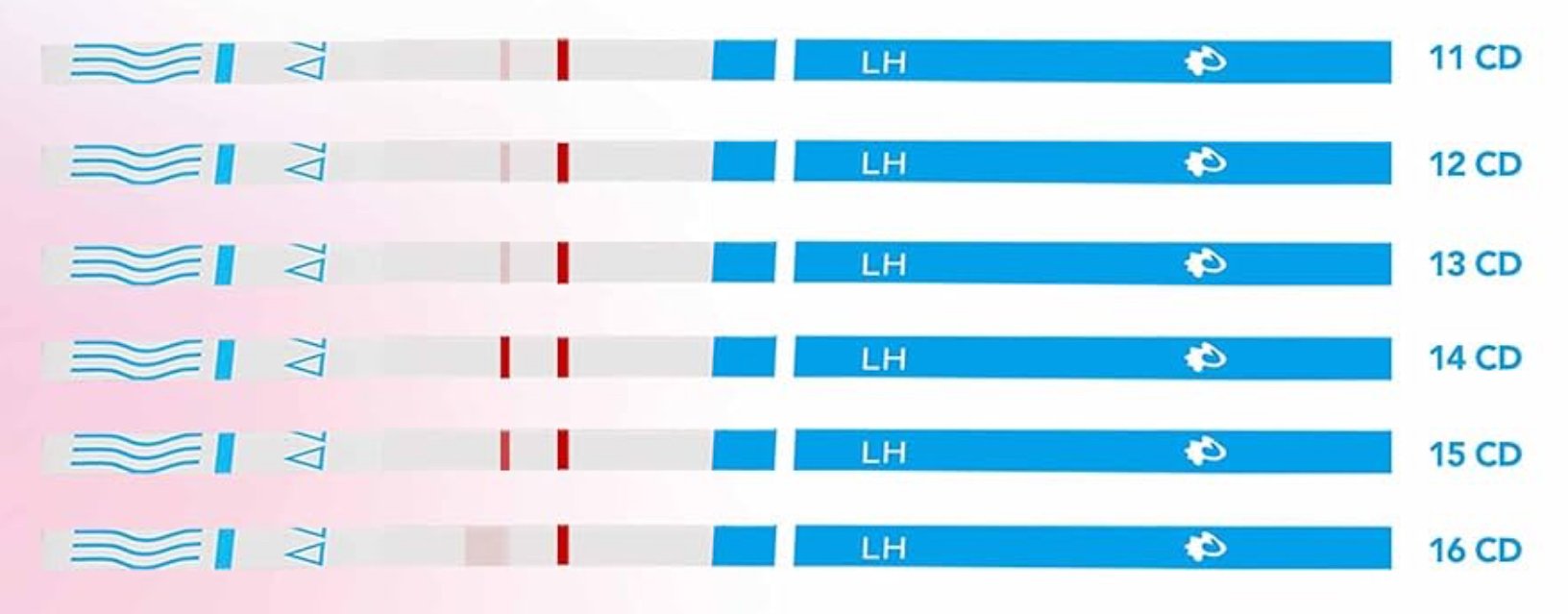
LH strips are often the entry point into cycle tracking when TTC. They’re affordable, easy to use, and widely recommended and available.
They measure luteinizing hormone in your urine, the hormone that surges just before ovulation.
For many women, this is genuinely helpful. A positive test can narrow the fertile window and make timing intercourse feel less like guesswork.
But here’s where confusion often creeps in.
A positive LH test tells you your body is attempting to ovulate, but doesn’t confirm that ovulation actually occurred.
In some cases, such as in PCOS, LH levels can be higher than typical threshold values throughout the cycle leading to false positive LH surge readings which makes it harder to identify a true surge.
OPKs may be useful for timing, but are limited in ovulation confirmation and their diagnostic capabilities.
This is why some women see positive OPKs month after month… without conception.
OPKs are a starting point. Not a full picture.
Basal Body Temperature: The Story After Ovulation
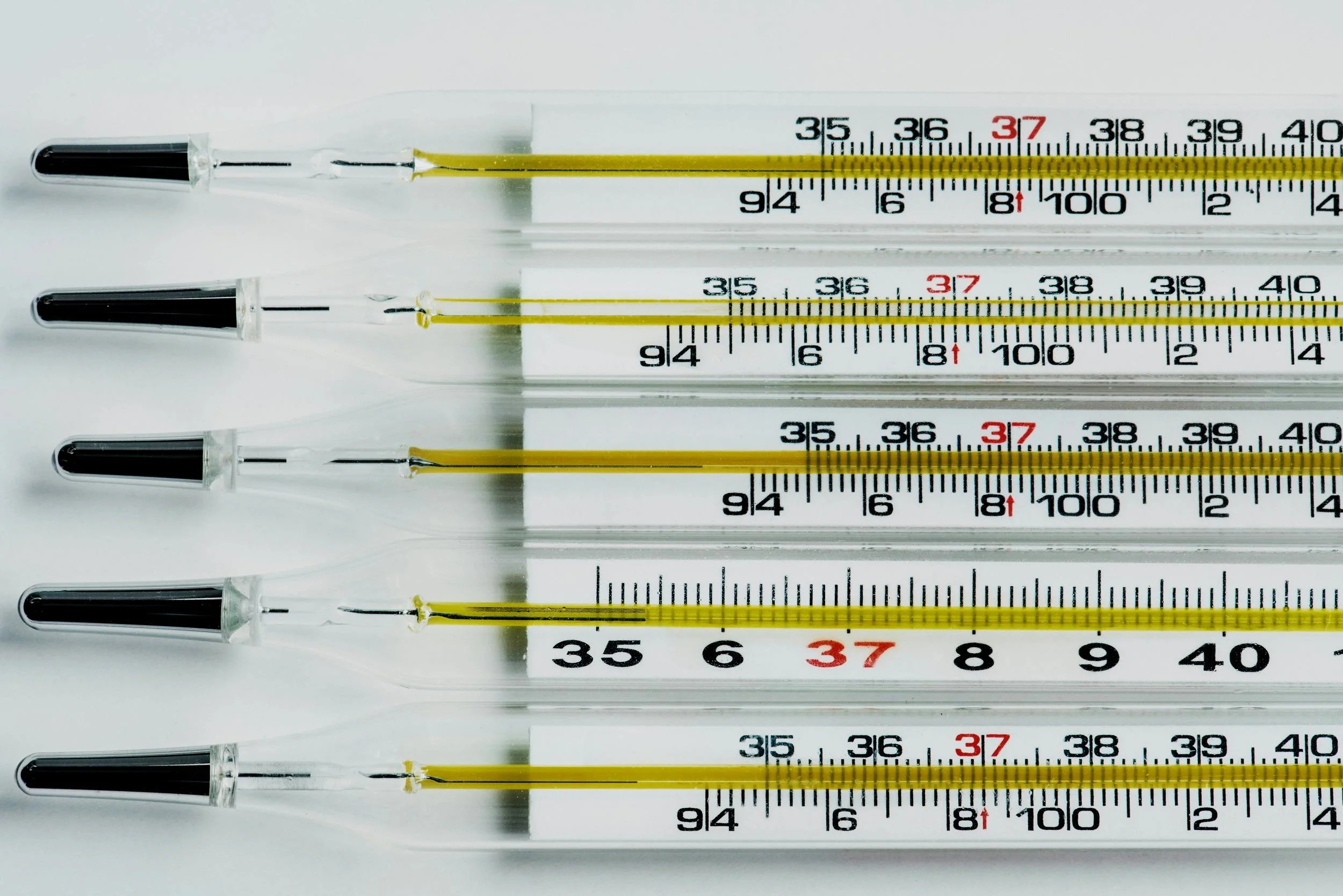
BBT charting often comes next.
By taking your temperature first thing every morning, you can observe the interplay between FSH and estrogen throughout the follicular phase and the temperature shift that happens after ovulation, driven by progesterone.
This can be incredibly validating and informative.
For the first time, you’re not guessing—you’re seeing confirmation that ovulation did happen.
BBT also helps identify:
long or short follicular phases that may be impacting egg quality
inconsistent ovulation
hormonal detoxification issues
Eastern Medicine uses BBT charting as a highly effective and nuanced diagnostic tool, assessing the shifts in your temperature to identify imbalances in your various organ systems and to inform the most appropriate treatment strategies for your unique patterns.
But BBT has limits.
It’s retrospective.
It tells you what already happened.
And for women who are already stressed or sleep-deprived, it can quickly become another place to feel like you’re “doing it wrong.”
Used thoughtfully, BBT is a powerful reflection tool but not a predictive one.
Hormone Monitors Like inito: Depth Without a Map
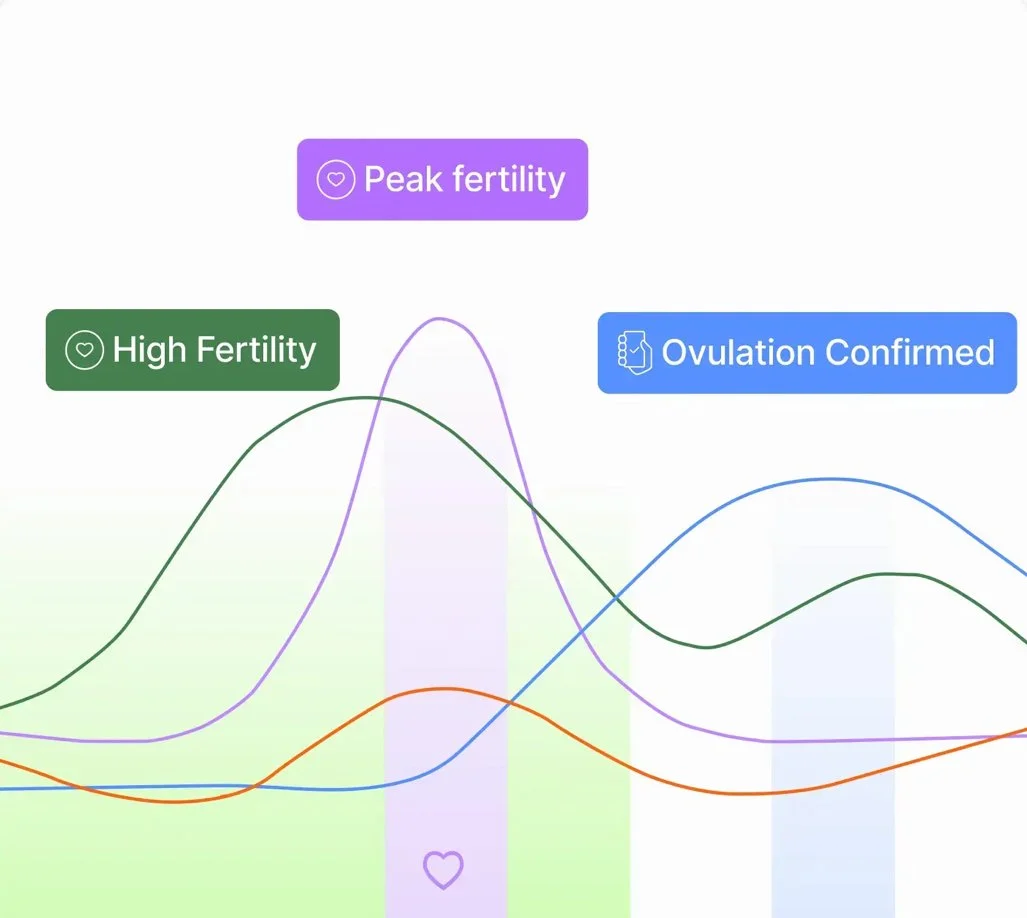
Hormone monitors such as inito add another layer entirely.
By tracking estrogen, FSH, LH, and progesterone metabolites across the cycle, these tools offer a much more detailed view of hormone patterns over time.
Inito readings can help you predict ovulation by measuring rising estrogen and LH, confirm ovulation by monitoring progesterone, and be the first indicator of early pregnancy.
But there’s a catch.
More data doesn’t automatically mean more clarity.
Without a framework, hormone monitors can actually increase anxiety, especially when values fluctuate or don’t match what the app labels as “optimal.”
And they don’t give you any information about how to address any out of range values.
Why Tracking Alone Doesn’t Get You Pregnant Faster

This is the part that often goes unsaid.
You can:
ovulate regularly
hit the fertile window perfectly
have labs and charts that look “normal”
…and still not conceive.
Because conception depends on more than hitting your fertile window perfectly.
Tracking tools can show you where something may be off, but they don’t tell you what to do about it.
How Fertility Acupuncture Fits In

This is where fertility acupuncture and Eastern Medicine at Fertile Earth can be especially helpful, particularly for women seeking care in North County San Diego who want personalized, whole-systems support (or even online support, see Fertility Club).
At Fertile Earth, the data you collect from cycle tracking is used to inform your pattern diagnosis and implement treatment strategies that are specific to your unique needs.
By understanding what your hormones are doing, if and when ovulation is occurring, and how long your luteal phase is, specific acupuncture and herbal strategies can be applied in a strategic and staged process to shift them to a more ideal and fertility friendly pattern, making tracking more meaningful and a tool to visualize progress over time.
Choosing the Right Tool for You
If you’re early in the process with regular cycles, simple tracking may be enough.
If you want confirmation and insight, layering tools can help.
If you’re navigating more complex fertility challenges, deeper tracking paired with a strategic, whole-systems approach is often necessary.
There is no “best” tool, only the right tool for where you are now.
The Fertile Earth Perspective

At Fertile Earth, cycle tracking is never about chasing perfect charts or ideal numbers.
It’s about:
understanding what your body is communicating
knowing what needs attention first
and moving through treatment strategies in the correct order
Data is useful.
But interpretation, timing, and support are what help you move forward.
Want Help Making Sense of Your Cycle?
If you’re tracking your cycle but still feel unsure what it all means, or how to use that information to actually get pregnant, you don’t have to figure it out alone.
At Fertile Earth, we look at the whole system, not just the numbers.
The tools matter.
But clarity is what changes outcomes.