
Herbs for Fertility: Why Your Pattern Determines What Works
Herbal Medicine | Fertility Support | Encinitas, North County San Diego
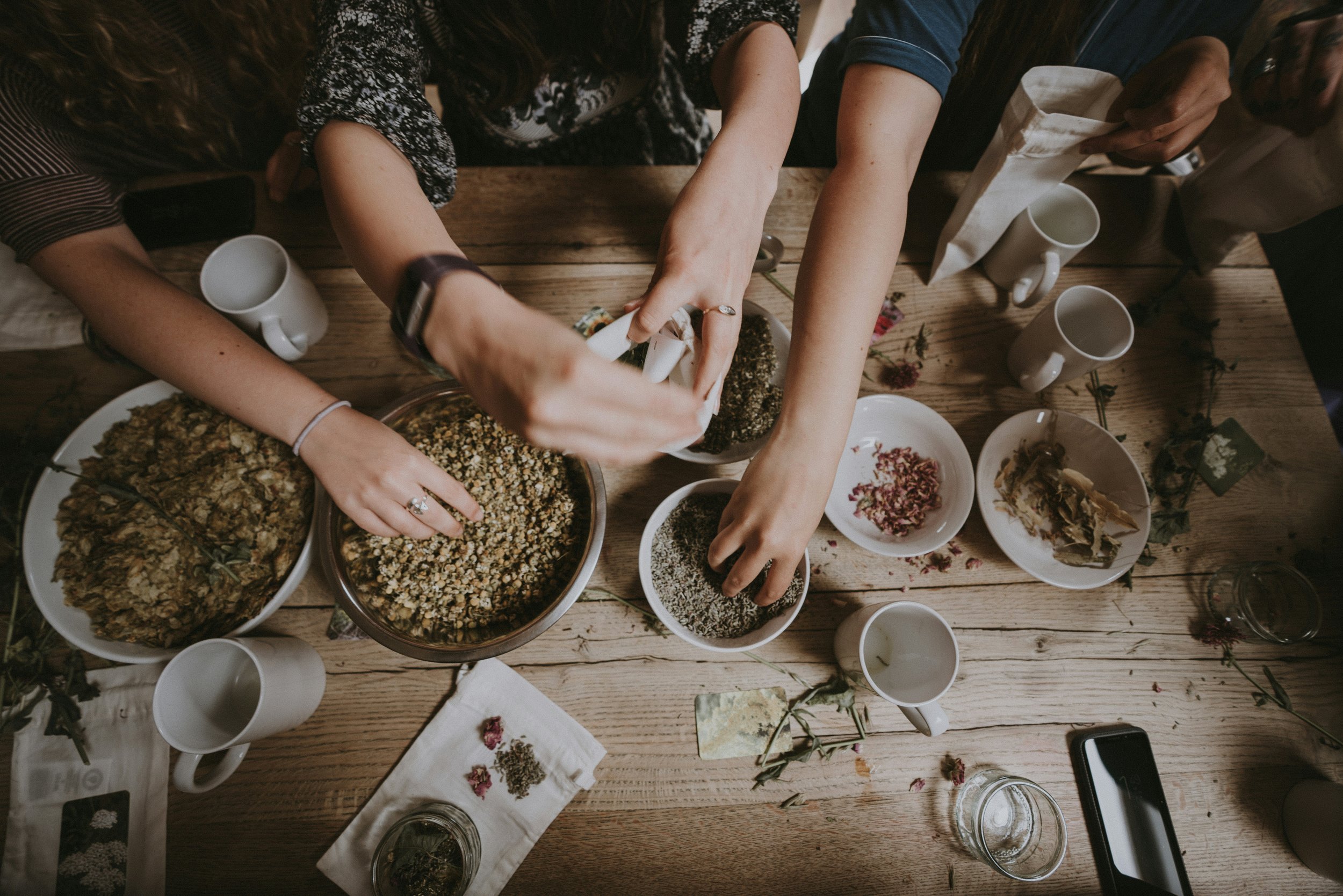
The most important question in herbal medicine for fertility is whether an herb matches what happening in your body.
If you spend any time on TikTok, in fertility forums, or on Instagram, you've seen the same handful of herbs for fertility recommended to everyone trying to conceive: vitex for hormonal balance, maca for energy and egg quality, ashwagandha for cortisol, raspberry leaf for uterine health. Every one of those herbs has thousands of women swearing by it, and every one of them has a specific clinical use that social media has quietly flattened into a recommendation for anybody with a fertility question.
The problem is that the herb that helped the woman in that TikTok video can make your situation measurably worse, and the quality of the herb has nothing to do with why. What you're looking at is a mismatch: her pattern is simply different from yours, and the same herb that met her body where it was can push yours in exactly the wrong direction.
Done properly, the herbal medicine you take for fertility is a prescription built from your full clinical picture, assembled for the specific body in front of the practitioner rather than pulled from a list because the names keep coming up in your feed.
Herbs work differently than supplements
The supplement mindset treats herbs the way it treats nutrients: as things you're either deficient in or you aren't, and things you can add safely across the board because more support is always better. The reasoning goes that maca is an adaptogen, so it balances your hormones, so everyone trying to conceive should be taking it, and that logic breaks down the moment you look closely at what herbs are and what they do to your body.
Herbs are pharmacologically active substancesthat shift your physiology in specific, directional ways, which is exactly why they help you and exactly why they can work against you. Some of them warm you while others cool you, some move the sluggish circulation that’s causing stagnation, while others tonify what you've become depleted in, and still others clear what your body has been accumulating and can't shed on its own. Many of them act directly on your hormones, and most of them do more than one of these things at the same time, which is why you can't read a single herb as simply good or bad for fertility.
The useful question isn't whether a given herb is good for fertility, because that question assumes your body and the next woman's body need the same thing. What you want to know is what a particular herb does inside a body, and whether that specific action is what your body needs right now, and the answer to that depends entirely on your pattern. The same herb that becomes the cornerstone of your protocol can become a real setback for the woman sitting next to you, purely because of which body it lands in.
If you don't know your pattern yet, you can identify your Fertility Type here. Everything below depends on it.
The one principle that decides everything
Every herb you might take has a temperature, a flavor, and a directional force, so that one herb runs warm while another cools you, one dries you out while another restores moisture, and one builds up what you're depleted in while another moves what's become stuck or drains what you've accumulated. In Chinese medicine this is the whole game, and the rule that follows from it is unforgiving in a way that turns out to be useful to you: a warming herb makes a heat pattern worse, a cooling herb makes a cold pattern worse, a drying herb deepens dryness, and a building herb aggravates what's already stagnant or damp.
That's why matching an herb to your pattern is the whole task rather than a refinement you get to skip: it decides whether the herb acts as a remedy for you or as an exacerbation, and everything below is organized around that single distinction.
The same herb can be a cornerstone for one pattern and a setback for another. Matching it to your body is the whole task.
Vitex: a warming herb for a depleted, cold pattern
Vitex agnus-castus, the chaste tree berry, has been used as a female hormone balancer for more than 2,500 years, and it remains one of the most popular hormone-regulating herbs in Western herbalism today. That popularity is precisely why it's also the herb I most often see you reaching for without any real thought to whether it fits the body you're in.
Energetically, vitex is a warming and drying herb, pungent and aromatic in character, and that single fact about it tells you most of what you need to know about where it belongs in your protocol and where it will quietly work against you.
Vitex belongs in a Tired/Cold pattern, the one marked by depletion, low progesterone, a short luteal phase, cold hands and feet, and the general sense that your whole system is running on empty. That's the picture vitex is primary for, because its warmth meets the cold you're carrying, and its action on the hypothalamic-pituitary-ovarian axis supports the progesterone production your depleted luteal phase has been missing. It's a secondary choice for you if your pattern is Pale (blood deficiency) or Stuck (stagnation), where it supports the formula rather than leading it.
Where vitex doesn't belong matters just as much:
If your pattern is Dry — Yin deficiency, elevated FSH, night sweats, the sense of running hot and short on moisture — a warming, drying herb is the wrong direction. It pushes further into the dryness your body is already fighting. Vitex isn't indicated here.
If your pattern is Soggy — damp accumulation, the PCOS-with-weight picture — vitex isn't a match either. That pattern needs clearing and moving, not the hormonal tonification vitex offers.
What the research adds, and where it gets murky. Vitex's best-documented mechanism is dopaminergic, meaning it modulates your prolactin and through that pathway supports the progesterone you produce in the luteal phase. Randomized controlled trials solidly support its use for the PMS symptoms you might recognize in yourself, including breast tenderness, irritability, and bloating, as well as for luteal phase defects tied to elevated prolactin. Here's the honest part most sources skip when they recommend it to you: its effect on prolactin appears to be dose-dependent and isn't fully resolved in the literature, so that lower doses may raise your prolactin while higher doses lower it. That uncertainty doesn't undermine careful clinical use of the herb, but it's a real reason vitex rewards the kind of precision you get from a practitioner and punishes the casual, guess-the-dose experimentation you'd do on your own.
Two things that matter in practice. Vitex needs three to six months of consistent, twice-daily dosing before you'll see its full effect, and it may shift your cycle length and your flow in the first few months, which is expected and usually settles on its own as your body adjusts. You shouldn't combine it with hormonal birth control while you're taking it.
You'll see vitex recommended online for "hormonal imbalance" as though that phrase named one condition pointing you in one direction, when in reality your hormonal imbalance and the next woman's are rarely the same thing underneath. In a pattern that runs hot, dry, or damp, vitex is at best inert for you and at worst an aggravation, and in the pattern it was made for, a cold and depleted system like the Tired/Cold picture, it becomes one of the more valuable herbs you can take.
Maca: a deep tonic for depletion, not a universal booster
Maca is sold to you as a hormonal adaptogen that somehow reads whatever your body needs and balances it for you, and the reality is both more specific and more useful than that marketing promise. Maca is a warm, sweet, deeply nourishing tonic, which in Chinese medicine terms means it builds your Qi, builds your Blood, and tonifies your Kidney, including the Kidney Jing that represents the deep constitutional reserve your fertility draws on when it needs to.
Those energetics place maca precisely for you rather than universally. Maca belongs in the Tired/Cold and Pale patterns, which are the depleted, run-down, cold, and blood-deficient pictures where what your body needs above all is building up. If you're exhausted, your reserves are running low, your cycles have gone scanty, and you feel cold and drained much of the time, then maca adds warmth and substance to a system that's short on both. This is exactly where its well-documented benefits for your energy, your libido, and your cycle regularity come from.
But a warm, sweet, building tonic is exactly the wrong thing for two patterns:
If your pattern is Soggy — damp accumulation, sluggish metabolism, the PCOS-with-weight picture — a sweet warming tonic feeds the dampness. You'd be adding richness to a system that already can't move what it has. More input into a congested engine won't clear the congestion.
If you're running hot — a heat pattern, inflammation, a dry-and-overheated picture — maca's warmth pushes the wrong way.
Maca is safe for most women, and if it suits your pattern it's a lovely, food-like tonic that you can cook into your daily meals rather than treat as a supplement, which is part of what makes it appealing. Whether it's right for your pattern specifically is the question that decides whether you feel anything from it at all. If you're depleted and cold it's worth trying, and if you're carrying damp accumulation or running hot you're better off leaving it on the shelf and choosing something that moves in the direction your body needs.
Ashwagandha: a warming tonic for the exhausted and wired
Ashwagandha is trending everywhere as a cortisol herb, and the stress-fertility connection behind that trend is real, because the chronic stress you're under suppresses the signaling that drives your ovulation and can shorten your luteal phase. The reason ashwagandha works for the women it works for, and the reason it doesn't suit everyone who reaches for it, comes down to the same underlying fact about it: ashwagandha is a warm, dry, building tonic, and that character determines who it helps.
That character makes ashwagandha a primary herb for the Tired/Cold pattern, which is the depleted, exhausted, cold, foggy, stress-wrecked picture where your nervous system is fried and your reserves have been emptied out, and rebuilding exactly that is what ashwagandha does well. It's a secondary choice for you if your pattern is Pale (blood deficiency) and, used carefully, for the Dry pattern as well.
The Dry pattern is worth pausing on, because at first glance it looks like a contradiction you shouldn't ignore. Dry means Yin deficiency, so that you're depleted in moisture and prone to running hot, and ashwagandha reads as warm and dry on the surface, which would seem to disqualify it for you. The reason it can still help you is that it works as a deep tonic rather than a superficial warming agent, rebuilding the depleted reserves underneath. In a body as exhausted as a true Dry-pattern body, the restoration it provides reaches the Yin along with everything else. That's why ashwagandha is a secondary, carefully-paired choice for you in a Dry pattern rather than a primary one, and why any good formula built around it for you also combines it with moistening herbs that hold the dryness in check. It's not a free pass to put a warming herb into a hot, dry body.
Where ashwagandha doesn't belong:
Soggy patterns — a warm, building tonic adds to damp accumulation.
Stuck patterns — stagnation needs movement, not more building. Piling a tonic onto a stuck system deepens the stagnation.
What the research adds. Ashwagandha's active compounds are steroidal lactones called withanolides, and they're responsible for the adaptogenic and anti-inflammatory action that helps you, supporting your adrenal function, your sleep, and the chronic depletion that quietly undermines your reproductive hormones when it's left to run.
Two cautions worth knowing. The first is pregnancy, where the safety evidence conflicts. A 2025 systematic review in Phytotherapy Research concluded that the evidence for teratogenic or abortifacient activity is inconclusive, while some sources and regulatory bodies advise you to avoid it outright, so that the responsible position is to stop before a confirmed positive test. The difficulty for you is that the window in which you'd be taking it while trying to conceive overlaps with an early pregnancy you might not know about yet, which makes the timing harder than it sounds. The second caution is that ashwagandha stimulates your thyroid, which is useful to you in a Tired/Cold pattern with sluggish thyroid function but a real problem if your thyroid already runs hot, and it can also add to the effect of any sedative medications you're taking.
Raspberry leaf: a cooling tonic for lax, depleted tissue
Red raspberry leaf is the herb most often dismissed as gentle background noise, which undersells what it actually does.
It's a tonic emmenagogue — a specific and fairly rare category. Unlike stimulating emmenagogues that increase blood flow or drive activity, raspberry leaf tones lax uterine tissue, improving contractile efficiency. That's a meaningful clinical distinction. The herb doesn't push the uterus to do more — it helps it do what it's already trying to do, more effectively.
It also has a genuinely solid nutritive profile: iron, manganese, calcium, fragarine (an alkaloid with direct smooth muscle toning action). For women with blood deficiency — light or scanty periods, low energy, a thin uterine lining, pale complexion — raspberry leaf as a daily infusion is one of the more foundational things you can add. This is a Primary herb for the Pale pattern, and a reasonable secondary support for Stuck and Soggy presentations where lax tissue tone is part of the picture.
Where it's genuinely less useful: Dry and Tired patterns. Its cooling, astringent energetics work against what those patterns need. And the in vitro finding of mild antigonadotropic activity — potential FSH/LH suppression at high doses — is worth knowing about if you're in an active stimulation cycle, even though clinical significance isn't confirmed.
So it's not inert. It's specific — like everything else in this system.
Signs your herbs are mismatched to your pattern
You don't need a practitioner sitting across from you to notice when the herbs you're taking aren't landing, because your body will usually tell you if you know what to watch for. Keep an eye out for any of these signs:
Nothing changes after three full cycles. Most well-matched herbs produce some observable shift in your cycle, your energy, or your symptoms within three months.
Your symptoms intensify in a specific direction. More bloating and heaviness on a warming tonic suggests you're adding to an accumulation pattern. Increased dryness or heat on a stimulating herb suggests depletion that's being pushed rather than replenished.
Your cycle gets less regular rather than more. A temporary shift in the first month or two is expected. A pattern of increasing irregularity is information.
You're taking four or more herbs at once with no clinical rationale connecting them. Each one shifts your physiology in a direction. Stacked without a plan, they can work against each other.
You feel wired, depleted, or subtly worse and can't name why. This is common when a stimulating or warming herb meets a pattern that needed clearing or cooling.
If any of these describe what you've been experiencing, the more likely explanation is that the herbs are mismatched to your pattern rather than that you've bought a low-quality product, and the fix is to reassess the pattern before you reassess the brand.
Signs your herbs are mismatched to your pattern
You don't need a practitioner sitting across from you to notice when the herbs you're taking aren't landing, because your body will usually tell you if you know what to watch for. Keep an eye out for any of these signs:
Nothing changes after three full cycles. Most well-matched herbs produce some observable shift in your cycle, your energy, or your symptoms within three months.
Your symptoms intensify in a specific direction. More bloating and heaviness on a warming tonic suggests you're adding to an accumulation pattern. Increased dryness or heat on a stimulating herb suggests depletion that's being pushed rather than replenished.
Your cycle gets less regular rather than more. A temporary shift in the first month or two is expected. A pattern of increasing irregularity is information.
You're taking four or more herbs at once with no clinical rationale connecting them. Each one shifts your physiology in a direction. Stacked without a plan, they can work against each other.
You feel wired, depleted, or subtly worse and can't name why. This is common when a stimulating or warming herb meets a pattern that needed clearing or cooling.
If any of these describe what you've been experiencing, the more likely explanation is that the herbs are mismatched to your pattern rather than that you've bought a low-quality product, and the fix is to reassess the pattern before you reassess the brand.
If you're in an IVF or IUI cycle
All of this matters even more once you're in a medicated cycle. Some of the herbs you might take interact with the medications your reproductive endocrinologist has prescribed for you, either amplifying their effects, blunting them, or introducing variables that make your monitoring harder for your team to interpret cycle to cycle. Vitex in particular is known to interact with the hormone protocols you'd be on during stimulation.
So if you're working with an RE and also taking herbs you found on your own, disclose every one of them. Have the whole list assessed by someone who understands both the Western medications and the herbs sitting beside them. You can read more about how the timing of support works across a medicated cycle on our IVF support page.

In a medicated cycle, herbs you take on your own can change what your monitoring shows. Disclose everything you're taking.
What herbal medicine looks like when it's working
A well-prescribed formula, whether you take it as a tea, a tincture, or a capsule, is tailored to the specific pattern sitting in front of the practitioner. It addresses your primary imbalance, supports the organ systems most involved in it, and then gets adjusted for you as your pattern shifts over the months you're taking it. That last part is what a blog post can never do for you, because your pattern keeps shifting over time and a good formula has to shift with it.
Every patient at Fertile Earth Acupuncture in Encinitas gets an herbal recommendation specific to what her own cycle is expressing, on the occasions where an herbal recommendation is appropriate for her at all. From there we assess it together, match it to the pattern, and revisit it as things change for her. That process is slower and considerably less satisfying than picking five herbs off a blog post in an afternoon, and it's also far more likely to do something useful for the body you're trying to help.
So if you're already taking a stack of herbs and wondering why nothing has shifted for you, the thing to take seriously is the possibility of a pattern mismatch. The herbs you've chosen may be perfectly reasonable herbs that simply happen to be addressing a body other than yours.
Common Questions About Herbs for Fertility
Can vitex help or hurt my PCOS? It depends entirely on your pattern, which is why a blanket answer does more harm than good. Vitex is a warming, drying herb suited to depleted, cold patterns with low progesterone. The damp, heavier PCOS picture, what we'd call a Soggy pattern, generally isn't a match, because that pattern needs clearing and moving rather than warming tonification. If you have PCOS, the more useful question is what your pattern is underneath the PCOS label, since PCOS shows up as several different patterns that each call for different herbs.
Is ashwagandha safe while trying to conceive? The evidence is unresolved. Some sources cite its potential to cause miscarriage and uterine contractions, others describe traditional use for reproductive support. The responsible position is to stop taking it after a positive pregnancy test, which is difficult to time precisely while you're trying. Discuss it with a practitioner who knows your full picture.
How long before fertility herbs work? Give a well-matched herb three to six months of consistent use. Vitex specifically requires three to six months of twice-daily dosing before full benefit. Your follicles take roughly ninety days to develop, so anything affecting egg quality needs at least a full cycle of that development to show up.
Can I take fertility herbs and supplements together? Often yes, though the combination needs a rationale. Herbs shift your physiology in directions; stacking several without a plan can produce competing effects. Supplements filling a documented deficiency are generally simpler to combine than multiple active herbs.
Start With Your Pattern
The right herbal support for your fertility starts with understanding what your own body is expressing right now, and then matching the care you receive to that specific pattern rather than to whichever herb happens to be trending the week you go looking.
Discover your Fertility Type →
Fertile Earth serves women in Encinitas, Carlsbad, Solana Beach, Del Mar, San Marcos, Oceanside, Vista, and throughout North County San Diego.
Not local? The Fertility Club is a structured, stage-based membership program for women facing infertility from anywhere, with access to Laura's clinical framework, a comprehensive content library, and direct expert guidance.

About the Author
Laura Schultz, L.Ac. is a licensed acupuncturist specializing in fertility, preconception care, and IVF support in North County San Diego. With over a decade of clinical experience in women's reproductive health, she helps women understand the patterns influencing their fertility and address them in a strategic, structured way.