

FERTILE EARTH ACUPUNCTURE & HERBAL MEDICINE · ENCINITAS, CA
Fertility Acupuncture for Women Over 35 in Encinitas & North County San Diego
Age is one factor. It's not the whole story.
If you’re trying to conceive after 35, or 38, or 40, you’ve probably heard plenty about the statistics and much less about what you can do. You may have been told your labs reflect your age and that you need to move quickly.
Here’s what I want you to know first: each egg spends about 90 days developing before it’s released, and the conditions it develops in can be improved. Mitochondrial function, inflammation, blood flow to your ovaries, and your hormone signaling all shape how accurately an egg matures, and all of them respond to care.
Age does matter, and you deserve the real numbers. The chance that an embryo carries a chromosomal error rises with age, and by your late 30s it’s roughly half. That’s why your next few cycles are worth using well, and why the work starts with the environment your eggs are growing in right now.
Age influences your starting point. Where you go from there depends on much more than age alone.

What changes with age, and what you can influence
After 35, two things shift in parallel:
Egg quantity declines. AMH drops, antral follicle count decreases, and the pool of available eggs shrinks. This is a natural process that happens regardless of health, lifestyle, or fertility treatment. It's also why timing matters: the window for working on it is shorter than it was at 28.
Mitochondrial efficiency in egg cells decreases. This is the more significant mechanism behind age-related egg quality decline. The mitochondria in the cells surrounding each developing follicle produce the energy that powers chromosomal division during egg maturation. As mitochondrial function decreases — partly due to accumulated oxidative stress, partly due to declining hormonal signaling, and partly due to the cumulative effects of years of output without adequate recovery — the accuracy of that process declines. More errors occur. More embryos are chromosomally abnormal.
What this means practically: you can't reverse your age, but you can meaningfully improve the mitochondrial environment your eggs are developing in. The 90-day window before each ovulation is when that environment is being shaped — and what you do consistently in that window has a direct influence on the eggs that result from it.

The 90-day window that remains open
The egg ovulating this cycle started developing approximately 90 days ago. During those 90 days, it was responding to everything around it — the circulation reaching it, the inflammatory and oxidative load in the surrounding tissue, the hormonal signals guiding its maturation.
This means there's always a 90-day window ahead of you during which the eggs developing now can be supported. Three months of consistent work on mitochondrial function, ovarian blood flow, inflammation reduction, and hormonal regulation creates a meaningfully better environment for the follicles that will matter in the cycles to come.
That's the biology at work, and it's why starting now makes more sense than waiting one more cycle.

What Eastern medicine sees in the over-35 fertility picture
In Eastern medicine, the clinical pattern most commonly associated with 35+ fertility challenges is what we call Kidney Yin deficiency — or the Dry Fertility Type.
Yin is your body's cooling, moistening, nourishing reserve. It's the substance that supports tissues and fluids, regulates internal heat, and provides the foundational depth from which reproductive function draws. When yin is abundant, follicle development is robust, the uterine lining is well-nourished, and the nervous system can access genuine rest.
Yin deficiency develops when output consistently exceeds recovery — and modern life is exceptionally efficient at creating this pattern. Years of long hours, late nights, reliance on caffeine, intense exercise without adequate rest, chronic low-grade stress, and pushing through fatigue all gradually draw down the body's deeper reserves. Over time, the system loses some of its capacity to cool, hydrate, and restore itself.
In the context of fertility after 35, this often shows up as:
Elevated FSH — the brain working harder to recruit follicles that aren't responding as strongly
Low AMH — depleted ovarian reserve relative to what would be expected
Short, light periods or irregular cycles
Vaginal dryness and reduced cervical fluid
Night sweats or feeling hot in the evenings
The "wired but tired" experience — exhausted but unable to fully rest
Anxiety or restlessness that intensifies premenstrually
This pattern doesn't develop overnight, and it's not reversed quickly. But it is responsive to treatment — and it responds best when treatment addresses the underlying depletion directly, with the hormone numbers as a way to track it.
If that pattern sounds familiar, your next 90 days matter.
How the Fertile Earth approach works for women over 35
Treatment at Fertile Earth for the 35+ patient is calibrated to address both the pattern of depletion and the specific physiological priorities that matter most in this window.
Treatment moves through three phases, Reset, Clear and Rebuild, clearing what's working against you before rebuilding what's missing. That order matters even more after 35, because each 90-day window shapes the eggs you'll ovulate three months from now.
Reset: Reducing the inflammatory and oxidative burden that accelerates follicular aging. If you're over 35, subclinical inflammation from immune dysregulation, gut imbalance, or chronic stress is often a significant compounding factor on top of the natural changes of reproductive aging. Reset also lowers the everyday exposures that add to that burden, like household and personal care products. Addressing this first creates a better baseline for everything that follows.
Clear works through three stages:
Digestion, Metabolism & Fluid Regulation: Restoring the digestive and metabolic function that provides the raw materials for hormone production and tissue nourishment. For the Dry pattern specifically, the nutritional and absorptive foundation matters enormously, because yin can't be rebuilt if the system that generates it isn't working well.
Nervous System Regulation: Supporting nervous system regulation and the hormonal communication between your brain and ovaries. Elevated FSH in particular reflects a disrupted feedback loop at the pituitary level, one that can respond meaningfully to the kind of nervous system and hormonal regulation that acupuncture provides.
Circulation & Blood Flow: Improving ovarian circulation directly. Blood flow to your ovaries and follicles is one of the most significant modifiable factors in egg quality, and it's directly addressed through acupuncture, moxibustion, and self-care practices targeted at pelvic circulation.
Rebuild: Replenishing the reserves behind egg quality, your uterine lining, and carrying a pregnancy: Yin, Blood, and the deeper reserves Chinese medicine calls Kidney essence. After 35, and especially with the Dry pattern, this is often where much of the work lies. Most fertility patients need Rebuild, and if you're depleted, it starts alongside Clear.
What changes with consistent treatment
Women over 35 who go through consistent care at Fertile Earth typically notice, over two to four months:
More regular cycle length and more predictable ovulation
Improved FSH on repeat CD3 labs
Better progesterone production in the luteal phase
Improved cervical fluid quality and quantity
Reduced night sweats and premenstrual heat symptoms
More stable sleep and better recovery
Reduced anxiety and nervous system reactivity
For IVF patients: better ovarian response to stimulation and improved embryo quality
The timeline matters here. These shifts don't happen in two weeks. They happen in the 90-day window that aligns with follicle development — which is exactly why consistency across that full window produces different results than sporadic treatment.
Over 35 and heading toward IVF
If you're 35+ and your RE has recommended IVF — or if you're considering it proactively — the pre-retrieval window is where the most meaningful preparation happens.
The eggs retrieved in your IVF cycle are the eggs that have been developing for the past 90 days. Their quality reflects the environment they've developed in: mitochondrial function, oxidative load, circulation, hormonal signaling. Beginning preparation at least three months before your intended retrieval gives those developing follicles the best possible conditions during the window when their quality is being shaped.
For women with elevated FSH or diminished ovarian reserve, the specific priming medications your RE may recommend — including HGH, DHEA, testosterone gel, or CoQ10 — work in exactly the same direction as acupuncture and herbal preparation. Done together, they create a more comprehensive preparation than either approach alone.


This approach is a good fit when:
You're 35 or older and TTC naturally, and want to actively support egg quality and hormone balance
Your labs show elevated FSH, low AMH, or markers your doctor describes as "reflecting your age"
You recognize yourself in the Dry pattern — depletion, heat symptoms, trouble resting, wired but tired
You're preparing for IVF and want to go in with the best possible egg environment
You've been through IVF and the results didn't reflect what you'd hoped — and you want to address what might have been a factor before trying again
You've been told "just try faster" but that advice doesn't address what’s driving the picture
Frequently Asked Questions
-
Acupuncture can improve the environment eggs develop in — and that distinction matters. It can't reverse chromosomal errors that have already occurred, and it can't increase your egg count. What it can do is meaningfully improve ovarian blood flow, reduce the oxidative and inflammatory load that accelerates follicular aging, and support the mitochondrial conditions that influence chromosomal accuracy during the 90-day developmental window. For many women, that's exactly where the gap is.
-
Elevated FSH reflects the pituitary working harder than it should have to in order to recruit follicles — it's a signal that ovarian response is reduced, not a verdict on your ability to conceive. FSH can fluctuate between cycles, and it can improve with the right support. What matters more than a single number is the full picture: FSH alongside AMH, estradiol, antral follicle count, and the pattern driving the imbalance. That's the assessment we build at your first appointment.
-
Meaningful changes in cycle quality typically appear within two to three cycles. Lab improvements — FSH, estradiol, progesterone — follow over three to four months of consistent treatment, aligned with the 90-day follicle development window. For IVF preparation, starting at least three months before retrieval is the recommendation.
-
No. Women in their early 40s conceive naturally and through IVF, and the work of improving the egg environment is relevant regardless of age. What changes is the urgency — there's less time to take a leisurely approach, and less room for cycles that don't produce results. But the biology of the 90-day window doesn't close at 40. Starting now is always better than waiting for conditions to be perfect.
-
In most cases, no. The exception is when there's a history of early pregnancy loss and certain hormonal markers need to reach a better range before trying again — something we discuss clearly at your first appointment. Otherwise, treatment is designed to support your cycle, not pause it.
Fertile Earth serves women in Encinitas, Carlsbad, Solana Beach, Del Mar, San Marcos, Oceanside, Vista, and throughout North County San Diego.
The 90-day window is open right now.
Your first appointment at Fertile Earth is where we assess the full picture — your labs, your cycle, your pattern — and build a three-month plan grounded in what's truly influencing your fertility.
Schedule Your First Appointment
You'll be taken to our secure scheduling system to choose your appointment time.
Not local to Encinitas or North County San Diego? Fertility Club is Laura's online fertility support program — the same framework, available wherever you are.
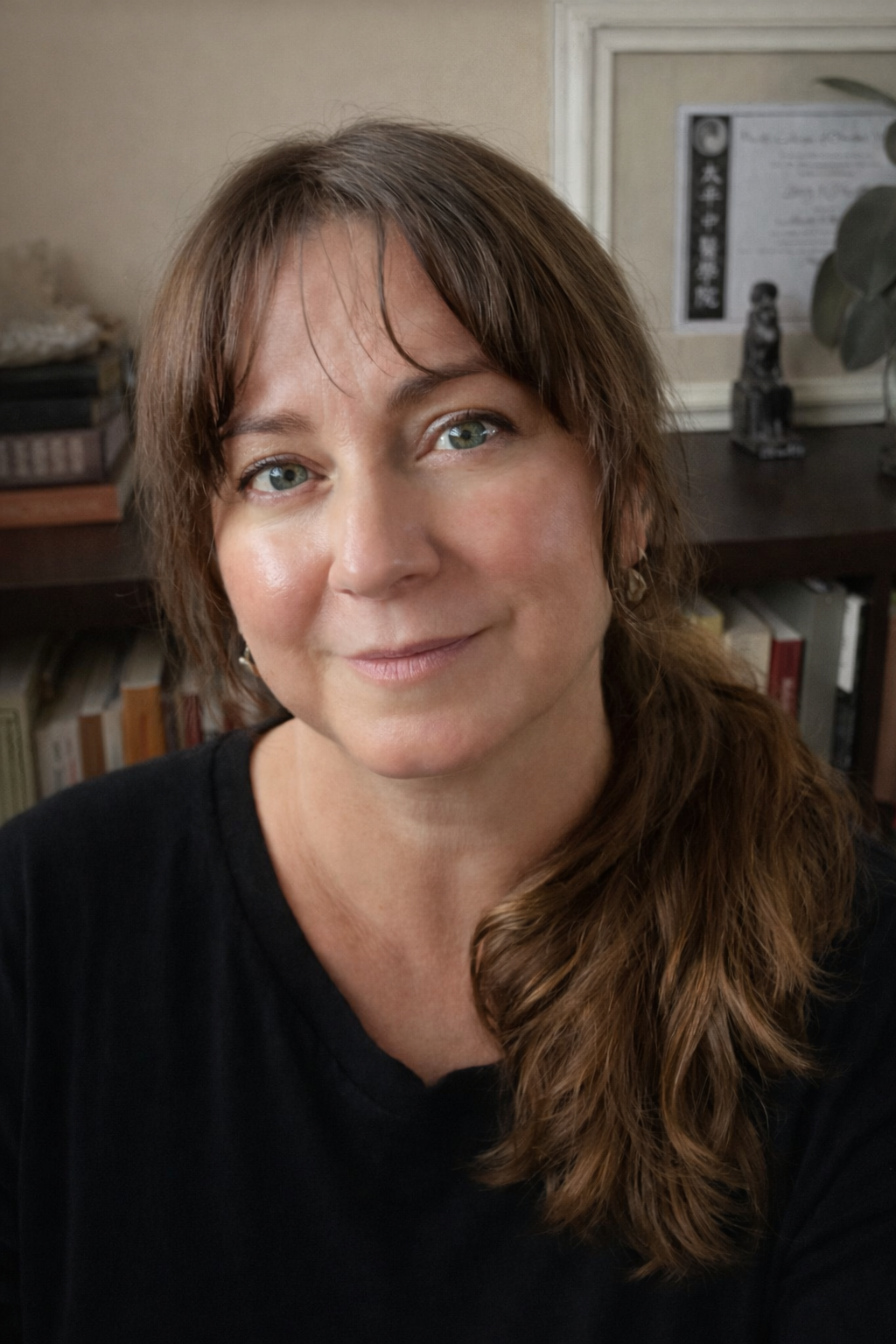
Laura Schultz, L.Ac. is a licensed acupuncturist with over 13 years of experience specializing in fertility, egg quality support, and IVF preparation in North County San Diego. She holds a Master of Science in Traditional Oriental Medicine and has completed advanced training in reproductive acupuncture and integrative fertility care.