

FERTILE EARTH ACUPUNCTURE & HERBAL MEDICINE · ENCINITAS, CA
PCOS/PMOS Fertility Acupuncture in Encinitas & North County San Diego
PCOS is being renamed — because Western medicine is finally acknowledging that it's not just about your ovaries.
If you've been diagnosed with PCOS, you've probably been given options that circle around the same center: regulate your cycle, induce ovulation, manage symptoms. Letrozole or Clomid to make you ovulate. Metformin for insulin resistance. Birth control to "reset" your hormones. Monitoring, waiting, trying.
These interventions can be useful — and at Fertile Earth, they're never dismissed. But they address what PCOS produces, not what PCOS is.
Researchers and clinicians are increasingly pushing to rename PCOS as PMOS — Polyendocrine Metabolic Ovarian Syndrome — because the ovarian cysts and reproductive symptoms are downstream effects of a deeper metabolic problem, not the source of it. The name change isn't semantic. It reflects a fundamental shift in how the condition needs to be understood and treated.
PCOS/PMOS is a systemic metabolic syndrome. The reproductive picture is a consequence of that metabolic dysfunction, not the origin of it. Treating it at the reproductive level alone — inducing ovulation, regulating the cycle — changes individual cycles without addressing the environment that made those cycles irregular in the first place.
That's the gap this approach fills.

What conventional treatment often misses
Western medicine has historically framed PCOS as a gynecological problem — irregular periods, excess androgens, cysts on the ovaries — and treatment has followed that framing. But the reproductive picture is downstream of a much wider metabolic dysfunction: insulin dysregulation that drives androgen excess and disrupts ovulation signaling; chronic systemic inflammation that impairs follicular maturation, endometrial receptivity, and embryo quality; mitochondrial inefficiency in ovarian tissue that affects egg quality even in women with high follicle counts; and lipid metabolism disruption that compounds the inflammatory environment and undermines progesterone production.
Getting the full metabolic picture — fasting insulin, HbA1c, full lipid panel, LH:FSH ratio, DHEA-S, free testosterone, SHBG — is essential. If that workup was skipped because your weight is normal or your PCOS was called "mild," that's a gap worth closing. Approximately 50% of women with PCOS/PMOS aren't overweight — the metabolic component is present regardless.

Know your pattern. Treat your pattern.
Two patterns, one diagnosis
In Eastern medicine, PCOS/PMOS doesn't exist as a single condition. It presents as one of two distinct patterns — or both at once — each requiring a different treatment approach.
The Soggy Pattern (Phlegm and Damp Accumulation)
This is the more commonly recognized presentation: sluggish digestion, tendency to retain weight or fluid, foggy thinking, irregular or long cycles, heavy or clotty flow, often cystic acne. In Eastern medicine, the digestive system isn't processing fluids efficiently — and the accumulation of what we call Phlegm and Damp disrupts metabolism, circulation, and hormone signaling at a foundational level.
This pattern maps closely to the insulin resistance and metabolic disruption at the center of the PCOS/PMOS picture. The digestive and metabolic dysfunction isn't a side effect of the condition — in the Soggy pattern, it is the condition. Which is why addressing gut health and metabolic function is Stage Two of the Fertile Earth approach — not because it sounds nice, but because in this pattern, nothing lasting happens without it.
The Stuck Pattern (Qi and Blood Stagnation)
This pattern appears more often in women with the lean PCOS/PMOS presentation, or where chronic stress is a significant driver: tension held in the body, a tightly wound nervous system, PMS with mood changes and irritability, painful periods, flow that's clotty and dark, and cycles that are irregular because ovulation is delayed or suppressed by a stress response that's become the body's baseline.
Where the Soggy pattern is about accumulation and sluggishness, the Stuck pattern is about poor flow — of blood, of hormonal signals, of the nervous system's ability to downregulate. The inflammatory picture is still present, but it's driven more by stagnation and nervous system dysregulation than by metabolic sluggishness. Treatment looks very different between the two.
Most women are a blend. Identifying the dominant pattern — and understanding how the layers interact — is where treatment begins, because the same protocol can't be effective for both.

How the Fertile Earth approach works for PCOS/PMOS
Treatment at Fertile Earth follows a four-stage sequence calibrated specifically to your pattern. For PCOS/PMOS, the metabolic and inflammatory load means that sequence matters more, not less.
These aren’t four things to work through over time. They’re four categories of influence on the metabolic and reproductive picture — and addressing them in this sequence is what prevents wasted effort. Most PCOS/PMOS protocols attempt to treat the cycle in isolation, without addressing the metabolic environment underneath it. This approach treats both, in the order your body can use.
Stage One: Resolve the Exterior
The inflammatory burden comes first. Chronic low-grade systemic inflammation is one of the most overlooked drivers of PCOS/PMOS — it interferes with ovulation, follicle quality, and mitochondrial function, and downstream work is limited until it's addressed.
Stage Two: Fortify the Center
Digestive function, blood sugar regulation, and metabolic health. For the Soggy pattern, nothing downstream holds without this foundation — insulin sensitivity, lipid metabolism, and gut health are what the rest of the cycle depends on. For the Stuck pattern, this stage also includes nervous system support to reduce the cortisol load compounding the metabolic picture.
Stage Three: Harmonize the Pivot
The elevated LH:FSH ratio in PCOS/PMOS reflects a disrupted feedback loop at the pituitary level. Acupuncture modulates the HPO axis directly — a documented mechanism — helping restore more balanced hormonal signaling and more regular ovulatory patterns.
Stage Four: Free the Flow
Circulation to the uterus and ovaries, supporting follicular development, ovulation, and endometrial receptivity. For the Stuck pattern, this is often where the most visible cycle changes happen; for the Soggy pattern, it builds on the metabolic work of Stage Two.
Herbal medicine runs alongside acupuncture throughout, tailored to your specific pattern and labs. For women with significant insulin resistance, targeted supplementation — myo-inositol and d-chiro-inositol in an evidence-based 40:1 ratio, berberine, chromium, and targeted antioxidant support for mitochondrial function — is incorporated based on your presentation.
What changes with this approach
Women with PCOS/PMOS who go through consistent treatment at Fertile Earth typically notice:
More regular cycle length — cycles becoming more predictable over two to three months
Improved ovulation — stronger LH surges, more consistent temperature rise on BBT
Reduced androgens — less acne, less hair thinning, reduced hirsutism over time
Better progesterone production in the luteal phase
Reduced PMS — less bloating, less mood reactivity, less breast tenderness
Improved metabolic markers — fasting insulin and HbA1c trending down on repeat labs
For the Soggy pattern: reduced puffiness, clearer thinking, more stable energy
For the Stuck pattern: reduced pelvic tension, less painful periods, better mood regulation
Most cycle changes become visible within two to three cycles. Metabolic shifts typically follow over three to four months of consistent treatment — which aligns with the timeline for meaningful changes in follicle quality. The metabolic groundwork laid in those months is what makes the cycle changes last.
PCOS/PMOS and IVF
If your RE has recommended IVF, PCOS/PMOS creates specific considerations worth understanding before you start.
Women with PCOS/PMOS typically have a high antral follicle count, which means they respond strongly to stimulation medications — sometimes too strongly. The risk of ovarian hyperstimulation syndrome (OHSS) is higher, and most IVF clinics managing PCOS/PMOS will use a more conservative protocol, often with a modified antagonist approach and a GnRH agonist trigger rather than hCG, to reduce that risk.
What your clinic may not address is the metabolic and mitochondrial environment those follicles are developing in. Having a high follicle count doesn't mean those follicles are producing high-quality eggs. The insulin dysregulation, inflammation, and mitochondrial dysfunction that characterize PCOS/PMOS affect egg quality even when retrieval numbers look promising — and they're addressable in the cycles before retrieval.
Acupuncture during an IVF cycle for PCOS/PMOS focuses on supporting an even, controlled follicular response and reducing the inflammatory environment that can complicate retrieval and transfer. The metabolic and mitochondrial work done in the preparation phase is what gives your embryos the best possible foundation.


This approach is a good fit when:
You've been diagnosed with PCOS/PMOS and want to address the metabolic root, not just induce ovulation
Your cycles are irregular or absent and you want to restore more natural ovulatory function
You've been told your PCOS/PMOS is "mild" but you still aren't conceiving
You have lean PCOS/PMOS and feel like the standard advice doesn't quite fit your presentation
Your insulin resistance or metabolic markers haven't been fully worked up
You're preparing for IVF and want better metabolic, mitochondrial, and ovarian health going in
You've done multiple rounds of Letrozole or Clomid without success and want to understand why
Frequently Asked Questions
-
Yes — and the mechanism is specific. Acupuncture directly influences the hypothalamic-pituitary-ovarian axis, which governs the hormonal signaling that PCOS/PMOS disrupts. Research has shown acupuncture reduces LH and testosterone levels, improves insulin sensitivity, and can restore more regular ovulatory patterns over a treatment course of three to four months. It works on the hormonal feedback loop in a way that medication alone typically doesn't — and the two approaches aren't mutually exclusive.
-
PMOS — Polyendocrine Metabolic Ovarian Syndrome — is the name a growing number of researchers and clinicians are pushing for because it more accurately describes what's happening. The polycystic ovaries and reproductive symptoms aren't the cause of the condition; they're consequences of deeper metabolic dysfunction — insulin resistance, chronic inflammation, mitochondrial inefficiency, and lipid dysregulation. Renaming it shifts where treatment focuses: the metabolic system, not just the reproductive one.
-
Lean PCOS/PMOS is more common than most women are told, and the metabolic component is often fully present regardless of body weight. What changes is where the dominant pattern shows up clinically. Insulin resistance in lean women frequently goes undetected because standard screening skips it when weight is normal. If you haven't had fasting insulin, HbA1c, and a full androgen panel run specifically, that metabolic picture hasn't been assessed.
-
Most women notice cycle changes — more regular length, stronger ovulation signs, improved luteal phase — within two to three cycles. Metabolic markers typically show meaningful improvement over three to four months of consistent treatment. This timeline isn't arbitrary: it aligns with the 90-day follicle development window, the same period during which egg quality is being shaped by the metabolic environment the ovaries are operating in.
-
No. Acupuncture and herbal medicine are designed to complement your medical management, not replace it. If you're on Metformin, Letrozole, or other medications, treatment is built around your existing protocol. If cycle regulation improves to the point where a medication conversation makes sense, that happens with your prescribing physician — not unilaterally.
-
Both are tailored to your specific pattern and labs. Herbal formulas are individualized — the combination that addresses a Soggy pattern can worsen a Stuck one, so generic protocols don't apply. Supplementation for the metabolic component typically includes myo-inositol and d-chiro-inositol in a 40:1 ratio, berberine, chromium, and mitochondrial support — adjusted based on your insulin markers, androgen picture, and how your pattern presents.
-
Not necessarily — and this is one of the most common points of confusion with PCOS/PMOS. Standard LH-based OPKs measure LH in urine, but many women with PCOS/PMOS have chronically elevated baseline LH as part of the disrupted HPO axis signaling that drives the condition. When baseline LH is already high, the test reads positive even when no ovulatory surge is occurring. You can get a positive OPK every day of your cycle and never actually ovulate. A monitor that tracks both LH and progesterone metabolites — like Inito or Mira — is significantly more reliable because the progesterone confirmation is what tells you ovulation really happened. BBT charting alongside an advanced monitor gives you the fullest picture.
-
It usually means one of two things: either ovulation isn't occurring, or the LH surge is happening but it's too weak or too brief to be captured by a standard OPK. In PCOS/PMOS, disrupted HPO axis signaling can produce a blunted LH surge that doesn't cross the threshold a standard test is looking for — especially if you're not testing frequently enough during the window when it occurs. It can also mean cycles are long or irregular enough that you're missing the surge entirely. A monitor that tracks both LH and progesterone metabolites — like Inito or Mira — is more sensitive to subtle surges, and BBT charting will show a temperature shift if ovulation occurred even when the OPK didn't catch it. If you're consistently seeing no surge and no temperature rise, that's worth bringing to your provider.
Fertile Earth serves women in Encinitas, Carlsbad, Solana Beach, Del Mar, San Marcos, Oceanside, Vista, and throughout North County San Diego.
Ready to treat the metabolic root, not just the cycle?
Your first appointment at Fertile Earth is where we assess your full picture — labs, cycle patterns, your specific PCOS/PMOS presentation, and the underlying pattern — and build a plan that addresses what’s driving it.
Schedule Your First Appointment
You'll be taken to our secure scheduling system to choose your appointment time.
Not local to Encinitas or North County San Diego? Fertility Club is Laura's online fertility support program — the same framework, available wherever you are.
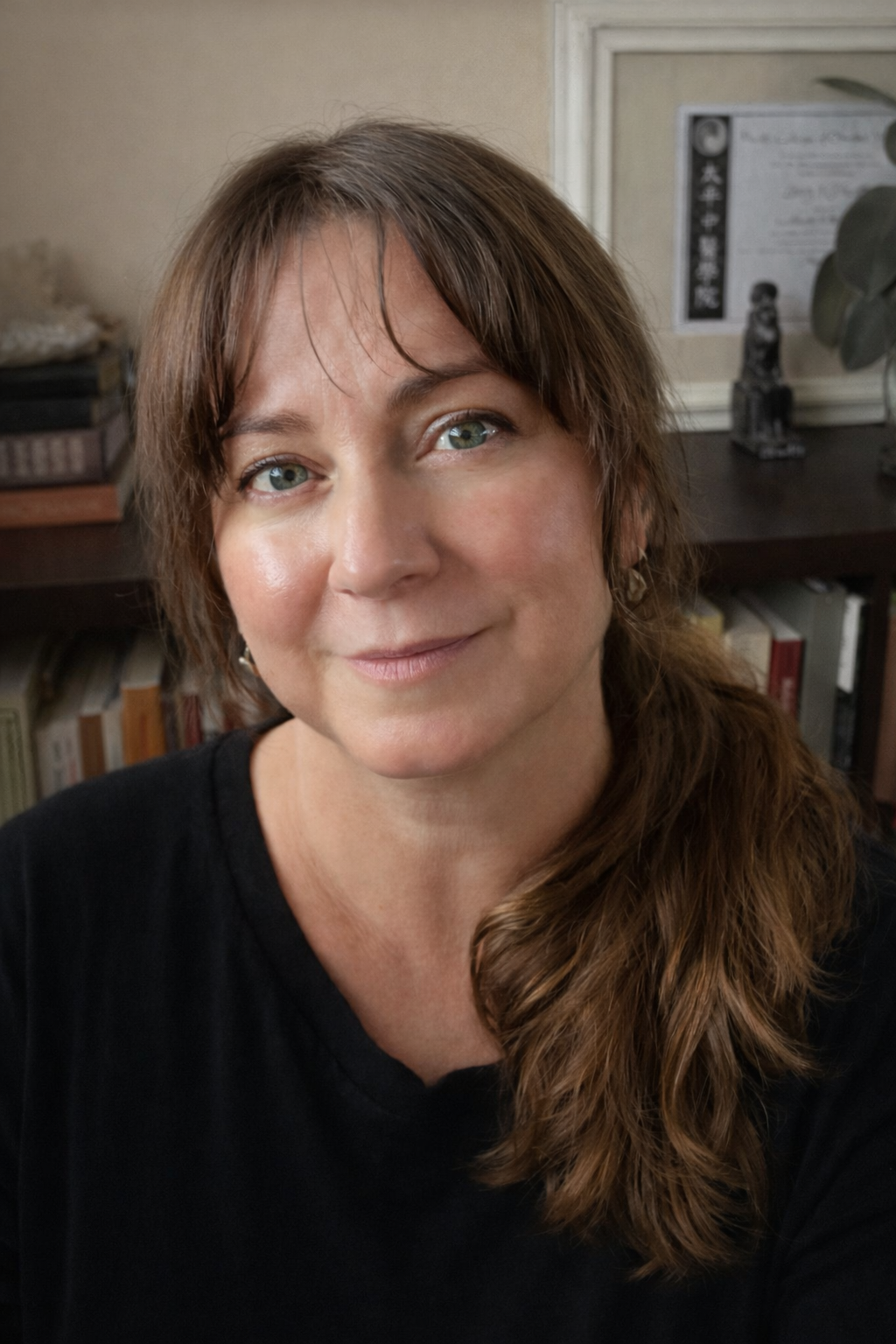
Laura Schultz, L.Ac. is a licensed acupuncturist with over 13 years of experience specializing in fertility, egg quality support, and IVF preparation in North County San Diego. She holds a Master of Science in Traditional Oriental Medicine and has completed advanced training in reproductive acupuncture and integrative fertility care.