
Why You’re Not Getting Pregnant Even When Tests Are Normal
You've done the bloodwork, had the ultrasounds, maybe had your tubes checked and your man's semen analyzed, and your doctor has looked at all of it and told you the thing that's supposed to be reassuring: everything looks normal. And yet month after month, you're still not pregnant, and "normal" has started to feel less like good news and more like a dead end.
If that's where you are, the instinct that something is still going on deserves to be taken seriously. Normal test results tell you that the most common major problems have been ruled out, which matters. They leave a lot of what influences your fertility unmeasured, and that's where I'd look next.

"Everything looks normal" is a hard thing to hear when you're still not pregnant.
What a normal fertility workup checks
A standard fertility workup is designed to find the big, clear-cut reasons a pregnancy isn't happening. At its core, it confirms three things: that you're ovulating, that at least one of your fallopian tubes is open, and that your man's semen analysis is normal. Most workups add bloodwork like your AMH (anti-Müllerian hormone, an estimate of how many eggs you have left), your FSH (follicle-stimulating hormone, the brain's signal to your ovaries) and your thyroid, along with an ultrasound of your uterus and ovaries.
When all of that comes back in range and you still aren't pregnant, the diagnosis is "unexplained infertility," and you're far from alone. Up to 30% of couples with infertility receive that diagnosis after a standard evaluation, according to the American Society for Reproductive Medicine. The word "unexplained" describes the limits of the testing. It tells you nothing has been found yet.
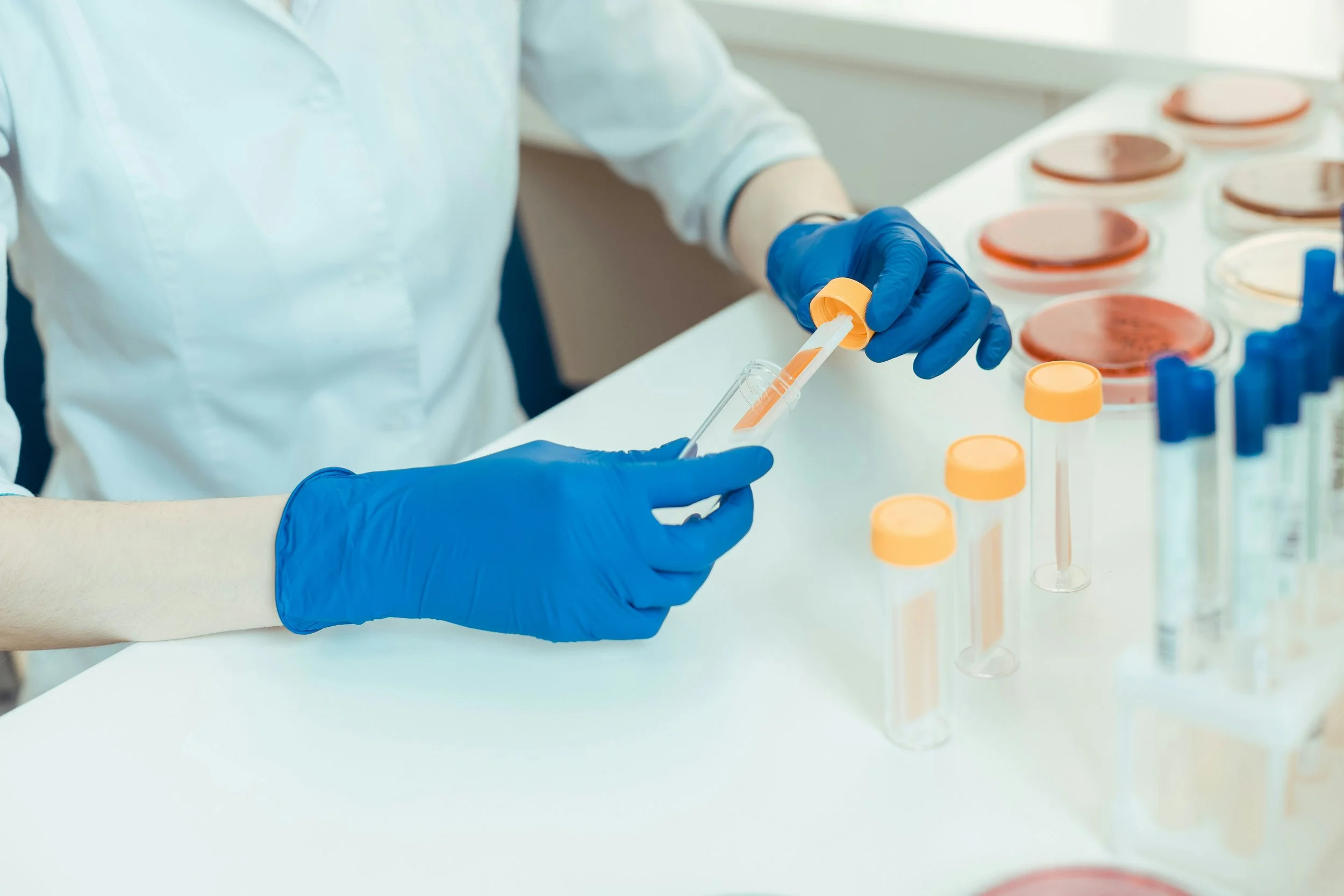
A standard workup is built to catch major problems, and it does that well.
Why normal results can still leave you not pregnant
Lab results are built around reference ranges, which are designed to flag numbers that are clearly abnormal. They tell you whether a value falls inside the range, and they leave out where in the range you sit, how your hormones behave across your whole cycle, or how your body's systems are affecting each other. A few examples:
Your thyroid. I like to see TSH (thyroid-stimulating hormone, the brain's signal to your thyroid) under 2.5 when you're trying to conceive. Most labs flag TSH as normal up to about 4, so a result of 3.2 can come back "fine" without anyone mentioning it. Fertility guidelines are divided on this: the American Society for Reproductive Medicine's 2024 guideline found that a TSH between 2.5 and 4 isn't linked to miscarriage, and that treating it with medication hasn't been shown to improve pregnancy rates. Even so, when your TSH sits above 2.5 and nothing else in your workup explains why you aren't pregnant, I think it's a thread to pull on. That can mean looking at the factors that influence thyroid function, and it can mean asking your doctor whether retesting or a fuller thyroid panel makes sense for you.
Your luteal phase. A progesterone test drawn around day 21 can look perfectly adequate on paper. But if your period starts less than 12 days after you ovulate, which is what I consider a short luteal phase, an embryo may not have enough time to implant, and a single blood draw won't show you that. Reading your cycle will.
Timing and odds. Even when everything is working well, getting pregnant takes time. A healthy 30-year-old has roughly a 20% chance of getting pregnant in any given month, about 25% at 20, 15% at 35 and 5% at 40, according to CCRM Fertility. Those figures measure the chance of conceiving each month, which is higher than the chance of a live birth. So a few months without a positive test can be normal too, and the standard advice is to get evaluated after 12 months of trying if you're under 35, or after 6 months if you're 35 or older.
A blood draw also captures one moment. Your egg develops over roughly three months before it's released, and your hormones shift every day of your cycle, so a snapshot can miss what's happening in between.

Ovulating is one piece of the picture, and several others have to line up with it.
Your body is responding to something
When months go by with normal results and no pregnancy, it's easy to start feeling like your body is failing you. I see it differently. Your body's top priority is keeping you alive and functioning, and reproduction is one of the first things it's willing to put on hold when resources are stretched, stress is high, or your internal environment feels unstable. Stress hormones, for example, can slow the signals your brain sends to your ovaries along the HPO axis (the hypothalamic-pituitary-ovarian axis, the chain of hormone signals between your brain and your ovaries).
That means a body that isn't conceiving is usually responding, logically, to the conditions it's in. And a body that's responding to something can be supported, because the conditions can change. The more useful question to ask is what your body is responding to and what it needs to feel safe and resourced enough to support a pregnancy.

Hormones can each test in range and still struggle to work together.
What your body may be responding to
The influences I look for most often rarely show up on a standard fertility panel, and they line up with the four Stages of my Four Stage Framework, which is the order I use to work through them so nothing important gets overlooked:
Inflammation and immune activity (Stage One, Resolve the Exterior). Low-grade inflammation from your diet, your gut, your immune system or a lingering infection can interfere with ovulation, implantation and hormone signaling, and a standard workup usually doesn't test for it.
Digestion and blood sugar (Stage Two, Fortify the Center). Your digestion shapes how your body builds, uses and clears hormones, and blood sugar swings put steady strain on the systems that run your cycle.
Your nervous system and stress load (Stage Three, Harmonize the Pivot). Chronic stress from overwork, poor sleep or months of trying to conceive keeps your body in a protective mode that can disrupt ovulation and the second half of your cycle.
Circulation to your uterus and ovaries (Stage Four, Free the Flow). Tension, inactivity and running cold can all affect how well your reproductive organs are nourished.
None of these needs to be dramatic to matter. Small influences that add up over months can be enough to keep a pregnancy from happening, and they tend to respond well when they're addressed in the right order.
How I look beyond your test results
In Eastern Medicine, the question is what pattern your body is expressing. I look at the timing and quality of your cycle, your cervical fluid, whether you spot before your period, how you sleep and digest, where you carry tension and how your energy shifts across the month. On their own, those details can seem minor. Together, they show how your body is functioning as a whole, and they point to your Fertility Type, which tells me where your biggest roadblock is right now.
That's why two women with the same normal labs can need completely different care, and why a pattern-based assessment can find useful information when standard testing hasn't. You can read more about how I work with unexplained infertility in Encinitas.

Inflammation, digestion and stress rarely show up on a fertility panel.
When to seek support, even if everything looks fine
Consider getting a pattern-based assessment if any of these sound familiar:
Your luteal phase is less than 12 days
You spot for a few days before your period starts
Your PMS has gotten worse, or your periods are more painful than they used to be
Your ovulation day moves around a lot from cycle to cycle
Your TSH is above 2.5 and no one has mentioned it
You've been told to "just keep trying" without a plan for what to do in the meantime
You're under 35 and have been trying for a year, or 35 or older and trying for six months
Ready to Find Out What Your Body Is Responding To?
Your first appointment at Fertile Earth in Encinitas is where I build the full picture: your labs, your cycle, your history and the patterns underneath them. From there, I map out what to address first and in what order, so your care fits what your body is expressing.
Schedule your first appointment at CAP Wellness Center, 535 Encinitas Blvd., Encinitas.
Not local to Encinitas or North County San Diego? Fertility Club is my online program, built around the same Four Stage Framework I use in the treatment room and available wherever you are.
Fertile Earth serves women in Encinitas, Carlsbad, Solana Beach, Del Mar, San Marcos, Oceanside, Vista, and throughout North County San Diego.

A pattern-based assessment picks up where your labs leave off.

About the Author
Laura Schultz, L.Ac. is a licensed acupuncturist specializing in fertility, preconception care, and IVF support in North County San Diego. With over 13 years of clinical experience in women's reproductive health, she helps women understand the patterns influencing their fertility and address them in a strategic, structured way.