
What Your Menstrual Cycle Is Trying to Tell You
Fertility Acupuncture | Encinitas, North County San Diego
Most women treat their period as an event to manage, not a message to read. It arrives, it's unpleasant or unremarkable, and then it's over until next month. But your cycle isn't just a monthly nuisance — it's the most detailed fertility report your body produces. And if you don't know how to read it, you're missing the clearest window into what's going on with your reproductive health.
The HPO axis — the hormonal feedback loop between your hypothalamus, pituitary gland, and ovaries — drives every phase of your cycle. Each hormone rise and fall is a tightly coordinated signal. When that signaling is working, your cycle reflects it. When something is disrupting it, your cycle reflects that too.
Here's what your body is trying to tell you.

Your menstrual cycle isn't just a monthly event — it's the most detailed fertility report your body produces.
Your period is a report card, not a reset button
The characteristics of your period — its color, consistency, volume, and duration — map directly onto the condition of your uterine lining and the hormonal environment it was built in.
Fresh, red flow that lasts four to five days and is moderate in volume reflects a well-vascularized, hormonally supported endometrium. That's the target. Variations from that tell you something specific.
Dark, brownish blood — particularly at the start or end of your period — often indicates that old blood is clearing slowly. This is frequently a sign of sluggish circulation or incomplete shedding in the previous cycle, and is common in what we'd call a Stuck pattern.
Light, pale, or very scanty flow usually points to a thin uterine lining and a deficiency picture — not enough blood and nourishment reaching the endometrium. A Pale pattern. This matters for implantation: a thin lining is a less hospitable environment for an embryo.
Heavy flow with large clots often reflects excess estrogen, poor progesterone balance, or inflammation driving significant endometrial buildup — a common presentation in both Soggy and Stuck patterns.
Significant cramping, particularly when it's severe or begins well before the period starts, isn't a normal feature of menstruation. It's a sign of stagnation, inflammation, or structural involvement — and it deserves clinical attention, not just ibuprofen.
“Common” doesn’t mean “normal.” If you’ve been told your period is fine when it’s painful, heavy, or irregular, that’s not a clean bill of health — that’s a missed diagnostic opportunity.”
Cervical fluid is your ovulation early detection system
If you're not tracking your cervical fluid, you're tracking half a cycle.
In the days leading up to ovulation, rising estrogen from your developing follicles signals the cervix to produce fluid — first creamy and opaque, then increasingly clear, slippery, and stretchy, resembling raw egg white at its peak. That peak-fluid day is your most fertile window. Sperm can survive in this environment for up to five days. Without it, sperm survival drops dramatically.
Absent or minimal cervical fluid — even in women who are ovulating — often points to a Dry pattern: insufficient estrogen, compromised follicular development, or a cervical environment that's been disrupted by medications or hormonal irregularity. It's also frequently associated with low AMH and diminished ovarian reserve, because fewer follicles means less estrogen output.
Tracking cervical fluid gives you real-time information about where you are in your follicular phase and how your estrogen is behaving — information that doesn't show up reliably on an LH test strip and can't be inferred from cycle length alone.

Your luteal phase length is a direct measure of progesterone function
Ovulation doesn't just release an egg — it triggers the transformation of the follicle into the corpus luteum, which is then responsible for producing all of the progesterone your uterine lining needs to support implantation and sustain early pregnancy.
In an optimized cycle, the luteal phase — the window between ovulation and your next period — lasts fourteen days. If yours is consistently shorter than twelve days, that's a luteal phase defect, and it matters.
A short luteal phase means the corpus luteum is underperforming. And the reason it underperforms is almost always rooted in what happened in the follicular phase: the quality of follicle development, the adequacy of the LH surge, the inflammatory environment the corpus luteum is trying to function inside. That's why supplementing progesterone in the luteal phase, while sometimes helpful in early pregnancy, doesn't fix a short luteal phase in cycles where you're trying to conceive. You can't rescue corpus luteum function after the fact. You have to build it upstream.
If you're charting your basal body temperature, a swift, sustained temperature rise after ovulation — maintained for fourteen days — is the clearest confirmation of adequate progesterone activity. A slow rise, a temperature that drops early, or a luteal phase that collapses before fourteen days all point to the same problem: insufficient corpus luteum support.
Cycle length tells you where the disruption is
Total cycle length is determined by two things: how long it takes to ovulate (the follicular phase), and how long the luteal phase lasts afterward. The luteal phase in an optimized cycle is always fourteen days. So if your cycle is long, that extra time is almost always in the follicular phase — it's taking your body longer to recruit a dominant follicle and reach ovulation.
That delay can come from multiple directions: impaired FSH signaling from the pituitary, poor follicular responsiveness, insulin resistance disrupting the HPO axis, chronic inflammation raising the threshold for ovulation, or nutritional deficiencies that slow follicular maturation. A long cycle isn't just inconvenient — it's pointing you toward something upstream that's creating friction in the process.
Short cycles are more nuanced. They often reflect a shortened follicular phase — which can mean less time for follicle development and egg maturation — or, in women with high FSH, a system that's pushing hard to ovulate early because follicular reserve is lower. Either way, the cycle length is telling you something about the quality and pace of that development.
Irregular cycles — the ones that vary significantly month to month, refusing to settle into a pattern — usually reflect a more dysregulated HPO axis. The feedback loop between your brain and your ovaries is inconsistent. That inconsistency is the thing to address, not just the cycle length itself.
What to do with this information
Reading your cycle well requires tracking more than just when your period starts and stops. The combination of cycle length, period characteristics, cervical fluid patterns, BBT charting, and if you have them, hormone panel results at the right time in your cycle — that full picture is what makes it possible to identify where the HPO axis is breaking down and why.
This is the work I do at Fertile Earth Acupuncture in Encinitas — not just symptom management, but pattern identification. Two women can have the same medical diagnosis and an entirely different clinical picture underneath it. What your cycle shows is specific to your body, your pattern, your history. And that specificity is what determines which approach will work for you.
Your cycle has been giving you this information every month. The question is whether anyone has helped you learn how to read it.
Ready to find out what your cycle is telling you?
Your initial appointment at Fertile Earth in Encinitas is where we build the full picture — not just what your labs show, but what your body is expressing as a whole. From there, we build a plan that works with your biology rather than around it.
Schedule your first appointment at CAP Wellness Center, 535 Encinitas Blvd., Encinitas.
Fertile Earth serves women in Encinitas, Carlsbad, Solana Beach, Del Mar, San Marcos, Oceanside, Vista, and throughout North County San Diego.
Not local to San Diego? Fertility Club brings this same clinical framework online. It’s a structured membership program built around the Four Stage approach to identifying and addressing what’s behind your fertility challenges — wherever you are. Learn more.
About the Author
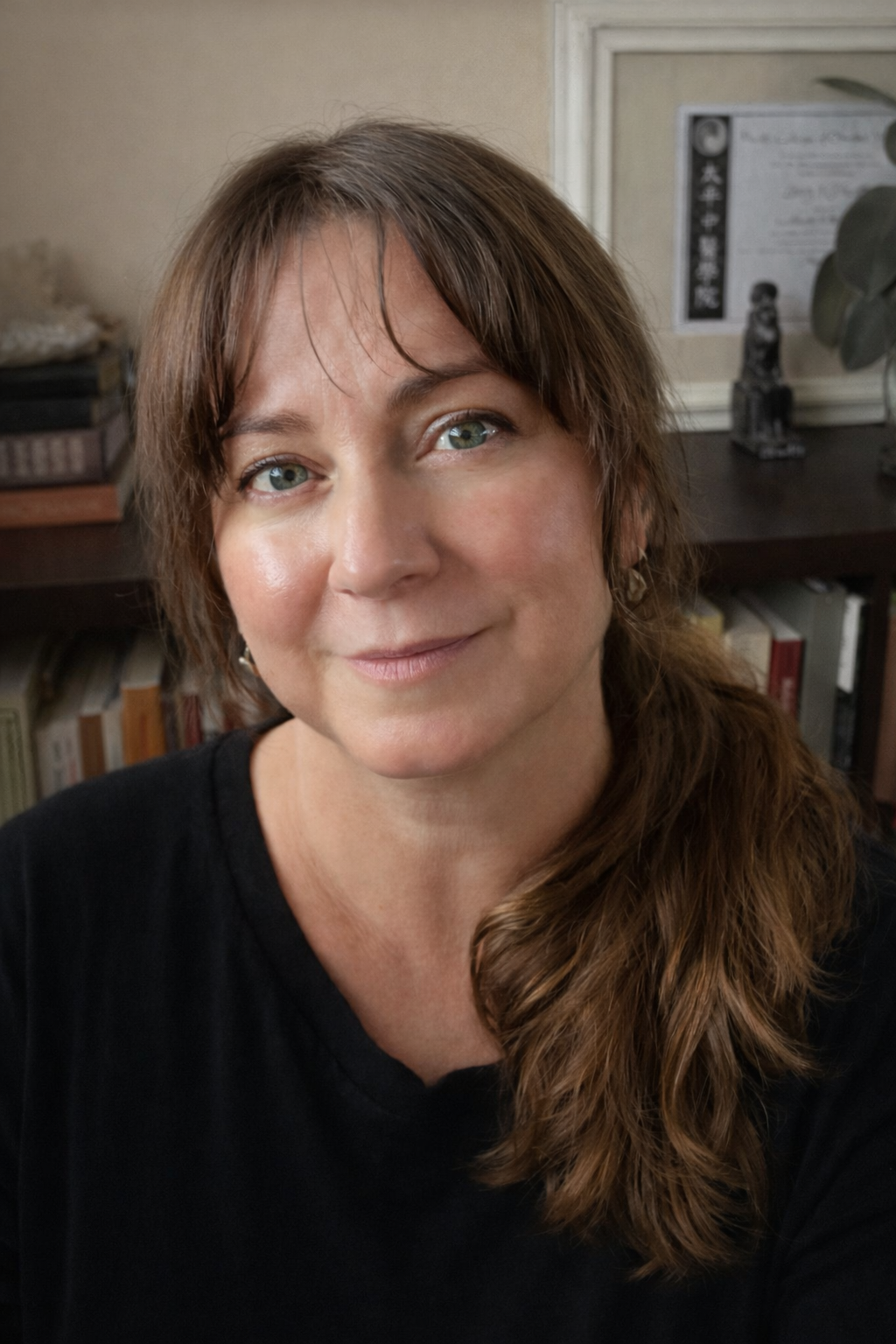
Laura Schultz, L.Ac. is a licensed acupuncturist specializing in fertility, preconception care, and IVF support in North County San Diego. With over a decade of clinical experience in women's reproductive health, she helps women understand the patterns influencing their fertility and address them in a strategic, structured way.